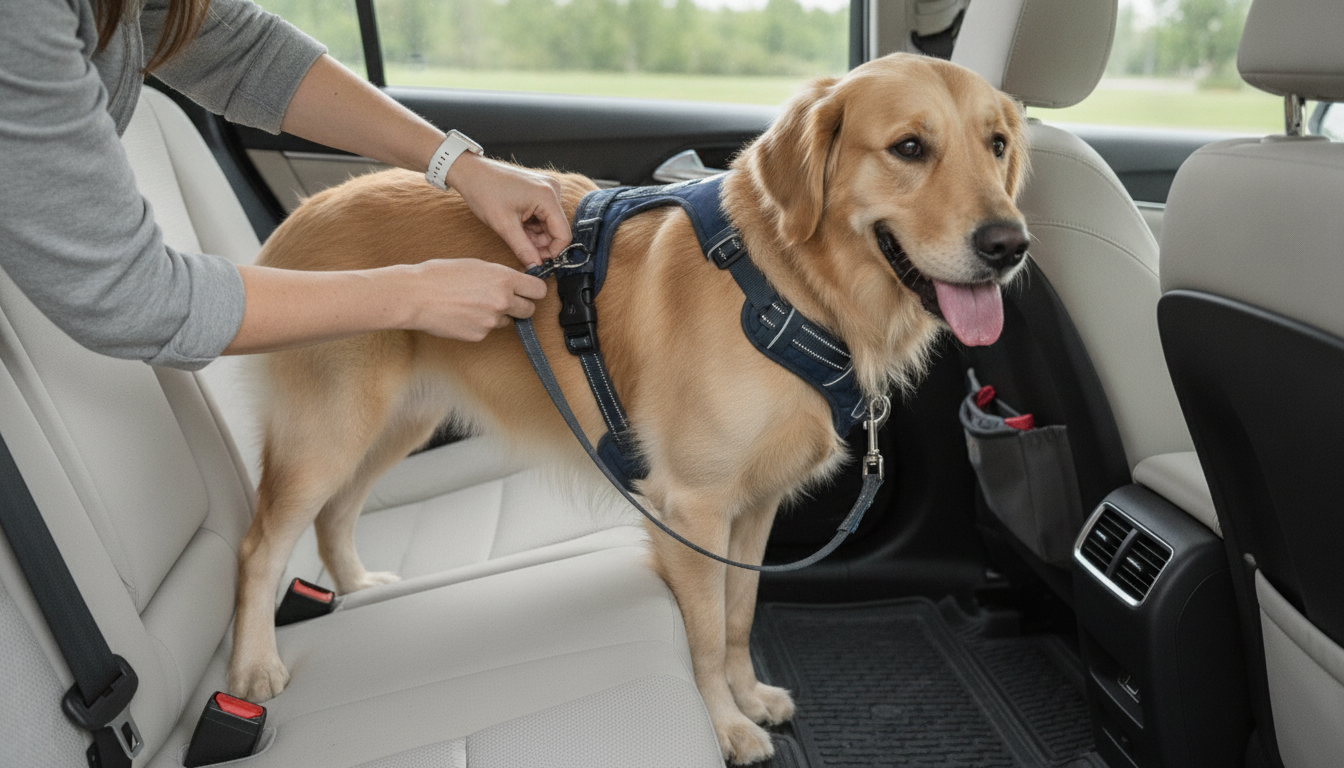
A no-pull harness can work well, but it has to do more than just “feel sturdy.” The most effective options are built to change your dog’s leverage so pulling becomes less rewarding. In practice, that usually means a front-clip attachment (on the chest) that gently turns the dog’s body back toward you when they surge forward, making it harder to put full weight into the pull.
With a properly working no-pull harness, you should notice quicker check-ins, fewer full-speed lunges, and more manageable tension on the leash. It won’t turn an enthusiastic puller into a perfect heel overnight, but it can meaningfully reduce the force and frequency of pulling—especially for dogs who drag you once they spot a squirrel, another dog, or an interesting smell.
Look for a front D-ring that sits centered on the chest, adjustable straps that prevent twisting, and a design that stays clear of the soft tissue around the neck. A back-clip can be useful for calm walking, but for pullers it often functions like a sled harness and encourages forward drive. Comfort matters, too: padding in the right spots can prevent rubbing, but too-bulky padding can reduce stability and let the harness shift.
If the harness rides up into the armpits or slides sideways, the “no-pull” effect drops fast. Adjust it so it’s snug without restricting movement, and pair it with a steady pace and rewards for slack leash moments. For a deeper breakdown of what to choose and how to use it, visit the main guide here.
Stop or change direction the moment the leash goes tight, then reward when your dog returns to a slack leash position. Consistency and high-value rewards for check-ins can reduce pulling quickly, even with the same leash and collar.










Leave a comment