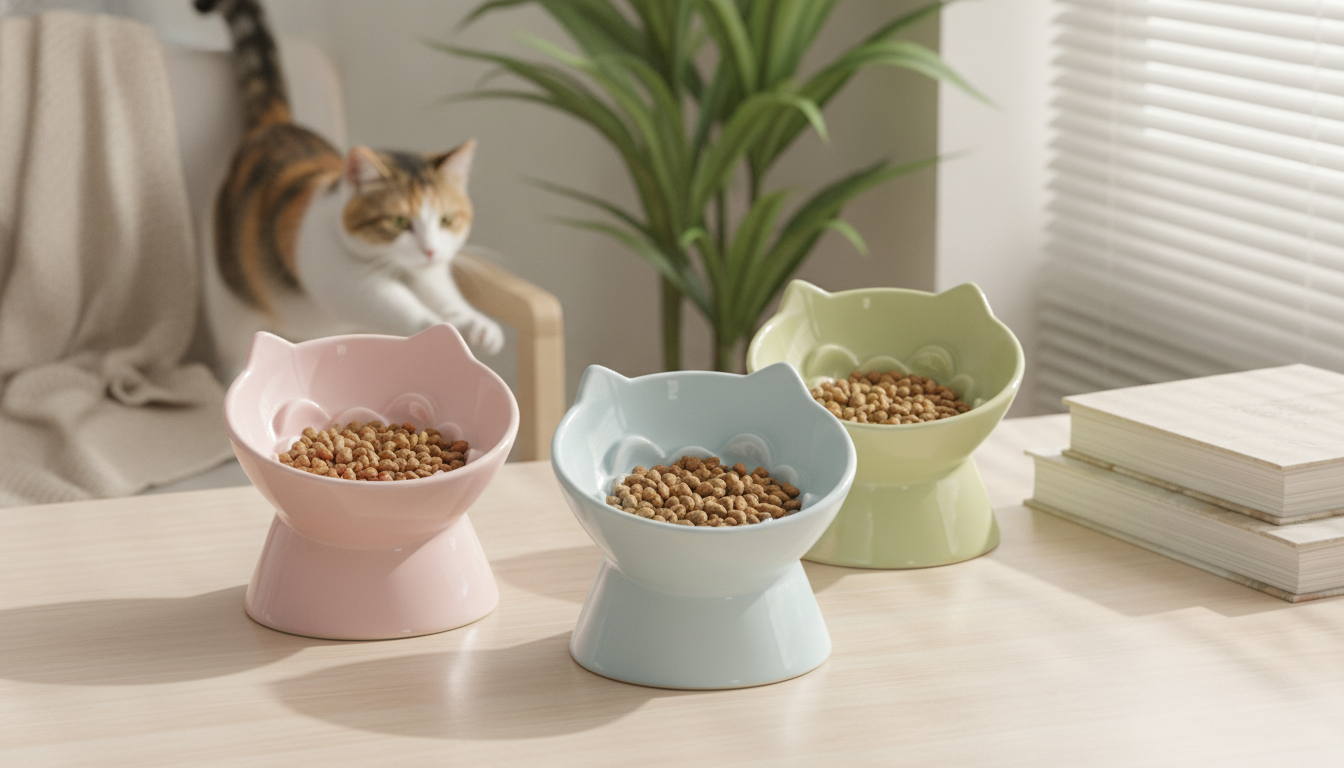
An elevated ceramic bowl can make mealtimes calmer and more comfortable—especially for cats that eat too fast or seem stiff when bending down. This design combines a raised eating angle with a slow-feeding surface to support steadier pacing, cleaner feeding, and a more natural posture at the bowl. For more guidance, see What Bowl Is Best for a Pomeranian? Size, Safety & Expert ….
Many cats do fine with a simple dish on the floor, but an elevated setup can be a noticeable upgrade for comfort and tidiness. For further reading, see Choosing the Right Dog Bowl for Your Dog.
If your cat tends to hunch, swallow hard, or step into the bowl area while eating, raising the dish and keeping it in a consistent place can make mealtime feel more organized.
Slow-feeding ridges aren’t meant to “frustrate” a cat—they’re meant to gently interrupt the sprint-to-the-finish pattern that some cats develop.
For cats who inhale kibble, try measuring the portion, spreading it across the ridges, and letting your cat work through it at a steadier pace. For wet food, pressing a thicker pate lightly into the contours can slow eating without turning the bowl into a hard-to-clean mess.
Material matters—both for hygiene and for how the bowl behaves when a hungry cat dives in.
Daily pet food safety habits help protect your cat’s digestion and reduce bacterial buildup. For practical handling tips, see the FDA’s guidance on safe handling of pet food.
Use this overview to match bowl style to eating speed, mess level, and comfort needs. Cats with whisker sensitivity often prefer wider, shallower eating surfaces regardless of material.
| Bowl type | Best for | Pros | Watch-outs |
|---|---|---|---|
| Elevated ceramic slow feeder | Fast eaters; comfort-focused setup | Stable, taste-neutral, supports slower bites and raised posture | Grooves need thorough cleaning; may not suit very runny foods |
| Standard floor bowl (any material) | Cats with normal eating pace | Simple, inexpensive, easy to find | More bending; easier to push around; may encourage faster gulping |
| Puzzle feeder (plastic/silicone) | High-energy cats needing enrichment | Strong slowdown and mental stimulation | More parts to clean; some plastics can hold odors/scratches |
| Stainless steel bowl (flat) | Hygiene-first households | Durable, easy to sanitize, lightweight | Can slide; not a slow feeder unless paired with an insert; some cats dislike clinking |
Elevation helps most when it matches your cat’s size and stance. The goal is a relaxed posture—not stretching upward and not crouching down.
For general feeding guidance—especially if you’re balancing wet food, kibble, and treats—Cornell’s overview of cat feeding basics is a helpful reference: Cornell Feline Health Center – Feeding Your Cat.
If mealtimes trigger tension between cats, pairing structured feeding with household management can help. Consider Managing Fights in Multi-Cat Households for practical strategies that can make shared spaces—including feeding areas—feel more predictable.
If you’re looking for a single upgrade that targets both comfort and pace, the Ceramic Elevated Cat Bowl with Slow Feeding Design and Neck Protection is designed to support a more comfortable eating posture while encouraging steadier, smaller bites.
Raising the food can reduce how much a cat has to crouch and may encourage a more neutral head-and-neck position. Comfort varies by cat size and mobility, so if your cat still seems uncomfortable, check bowl height/angle and discuss ongoing stiffness with a veterinarian.
Slowing eating can help some cats that gulp and then regurgitate, but vomiting can also have medical causes. Monitor portions and frequency, and seek veterinary guidance if vomiting continues or is paired with lethargy, weight loss, or appetite changes.
Rinse promptly, then wash with warm soapy water using a soft brush to reach the contours. Clean after wet-food meals, avoid abrasive scrubbers, and replace ceramic bowls if you notice chips or cracks.








Leave a comment