HomeBlogBlogDog Meets Baby: Calm Safety Checklist for New Parents

Dog Meets Baby: Calm Safety Checklist for New Parents

Dog Meets Baby: Calm Safety Checklist for New Parents

Introducing Your Dog to Your Baby: A Calm, Step-by-Step Safety Checklist

A new baby changes sounds, schedules, and space—exactly the kind of shift that can overwhelm even a well-loved family dog. A structured, low-stress introduction plan reduces risk, protects the baby, and helps the dog feel secure. Use the checklist approach below to prep before birth, manage the first meeting, and build safe daily routines during the first week home.

Before Baby Arrives: Set Up Predictable Routines

The smoothest introductions start weeks before homecoming day. The goal is to reduce surprises and give your dog clear, repeatable patterns.

  • Confirm health basics: stay current on vaccinations and parasite prevention, keep nails trimmed, and plan grooming so accidental scratches are less likely.
  • Stabilize daily needs: keep feeding times, potty breaks, and exercise consistent so your dog isn’t running on pent-up energy when the house gets busier.
  • Teach or refresh foundation cues: “sit,” “down,” “stay,” “leave it,” “drop it,” and a reliable recall—reward calm, quick responses.
  • Create a designated dog zone: a bed or mat in a quiet spot where your dog can relax without being approached.
  • Practice gentle handling: reward calm while touching paws, ears, collar/harness, and body—useful during hectic baby-care moments.
  • Gradually introduce baby-related items: stroller, bassinet, swing, carrier—pair each with treats so new objects predict good things.
  • Plan management tools: use baby gates, x-pens, and doors to create boundaries instead of relying on repeated verbal corrections.

If you want a simple way to keep everyone consistent (especially during sleep-deprived weeks), use a one-page plan like the Printable Dog & Baby Introduction Checklist to assign roles, track progress, and avoid “we forgot the rule” moments.

Scent and Sound Prep: Make Baby Cues Familiar

Dogs learn fast through repetition. A little “practice” makes baby sounds and movements less intense when they become real.

  • Sound desensitization: play baby crying/newborn sounds at a very low volume during calm times; increase slowly only if your dog stays relaxed.
  • Scent introduction: before the first face-to-face meeting, bring home a baby-worn blanket (or hospital cloth). Let your dog sniff briefly, then reward and redirect to a calm activity.
  • Normalize “busy hands”: reward your dog for settling while you hold a doll, fold baby clothes, or rock an empty carrier.
  • Rehearse door greetings: teach “go to mat” when someone enters so excitement doesn’t turn into jumping or frantic pacing.

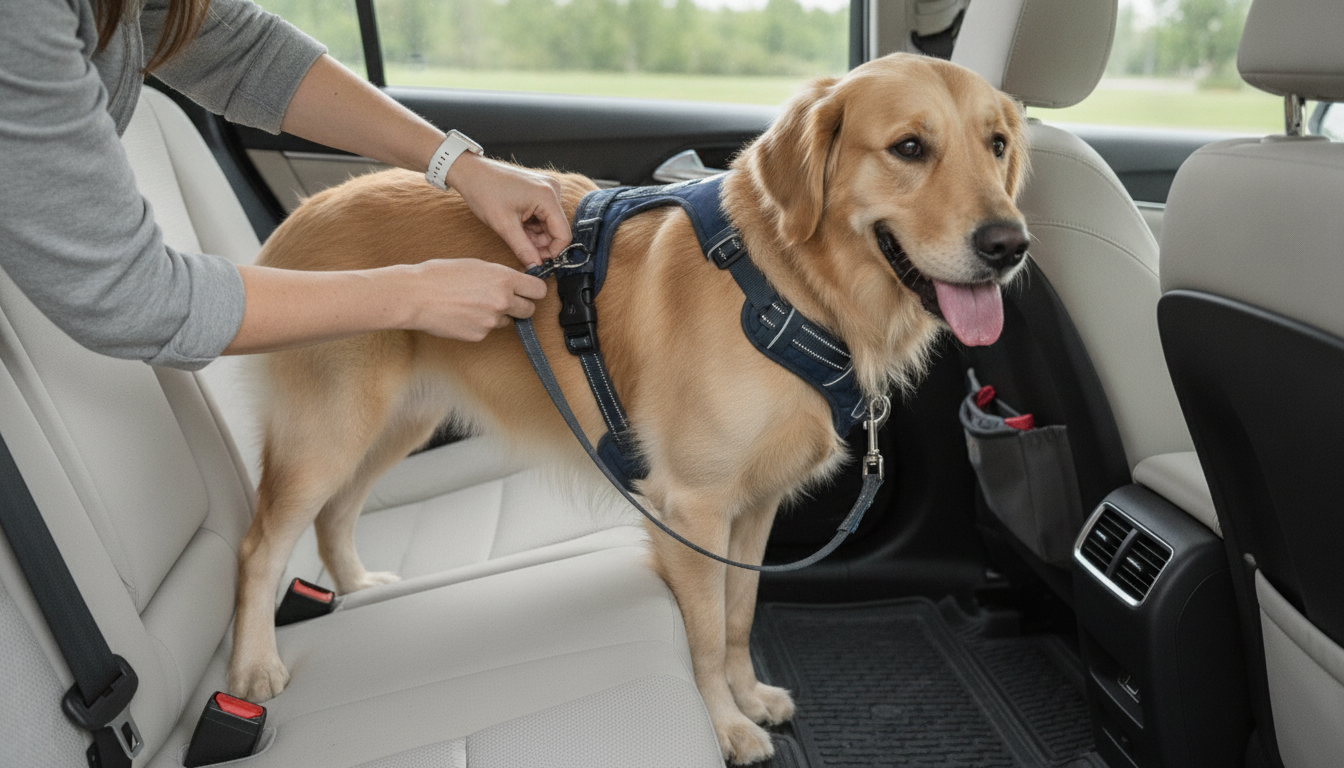
For safer practice walks and calmer controlled greetings, a secure harness fit matters. A quick reference like the Dog Harness Measurement Checklist can help you double-check sizing before you’re juggling a stroller and a leash.

Homecoming Day: The First Meeting Without Rushing

The first introduction should feel boring—in a good way. Keep it short, protected, and easy to end.

  • Meet your dog’s needs first: a potty break and short walk can take the edge off before the baby enters the picture.
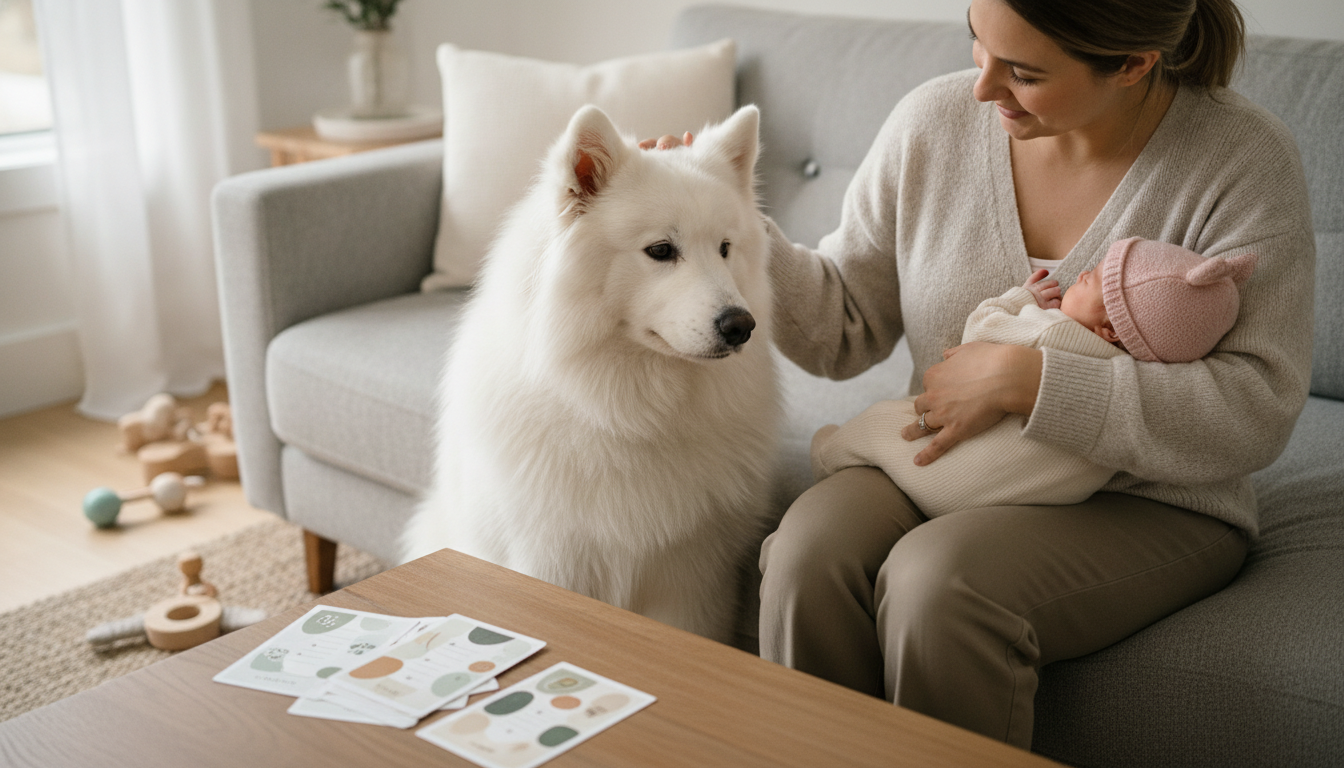
  • Start with calm containment: use a leash, gate, or barrier so your dog can observe without crowding.
  • Keep the baby elevated and protected: hold your baby securely; avoid placing the baby on the floor or on furniture within reach.
  • Allow brief, supervised sniffing only if relaxed: look for a soft body, loose tail, normal breathing; reward and end early.
  • Avoid forced closeness: no hugging, no holding the dog near the baby’s face, and no prompts for “kisses.”
  • Limit greetings: short, positive moments with breaks prevent overstimulation.
  • End on success: separate and give your dog a chew or food puzzle in their zone so everyone decompresses.

Reading Dog Body Language: Early Stress Signals to Act On

Dogs rarely “bite out of nowhere.” The earlier you notice stress, the easier it is to keep everyone safe. For a helpful visual guide, the ASPCA’s overview of canine body language is a solid reference.

For additional safety reminders, review the American Academy of Pediatrics guidance on keeping children safe around dogs and the AVMA’s dog bite prevention tips.

The First Week Home: Daily Management That Prevents Mistakes

First-Week Safety Plan: What to Do, What to Avoid, and What to Use

Situation Do Avoid Helpful tools
Baby feeding (day or night) Send dog to mat; reward calm; offer chew/lick activity Pushing dog away with hands; yelling; letting dog crowd the chair Baby gate, mat/bed, lick mat, stuffed toy
Baby crying Increase distance; treat for calm; reduce volume triggers when possible Comforting the dog by petting while anxious; forcing proximity White noise, treats, quiet room
Tummy time / floor time Use barrier and keep dog on leash or in dog zone Letting dog roam freely near baby on the floor Playpen, gate, leash
Visitors arrive Ask for calm greetings; use mat cue; provide structured breaks Excited crowding around baby and dog together Gate, mat, treats
Dog wants attention during baby care Offer scheduled attention later; reinforce settle; provide enrichment Letting dog nudge into baby’s space; inconsistent rules Puzzle feeder, chew, short training session

When to Get Professional Support

Printable Checklist: A Simple Way to Stay Consistent

FAQ

Should a dog ever be left alone with a baby, even for a moment?

No. If active adult attention can’t be maintained—even briefly—separate with a gate, pen, or closed door to prevent accidents and misunderstandings.

What if the dog growls at the baby?

Treat growling as a serious warning and communication. Calmly create distance, prevent repeat situations with barriers and structure, and contact a qualified trainer or veterinary behaviorist; don’t punish the growl.

How can barking or anxiety during baby crying be reduced?

Use gradual sound desensitization, add distance, and reward calm behavior while providing enrichment during predictable fussy times. If the reaction escalates or doesn’t improve, bring in professional help early.


Was this article helpful?

Yes No
Leave a comment
Top

Shopping cart

×