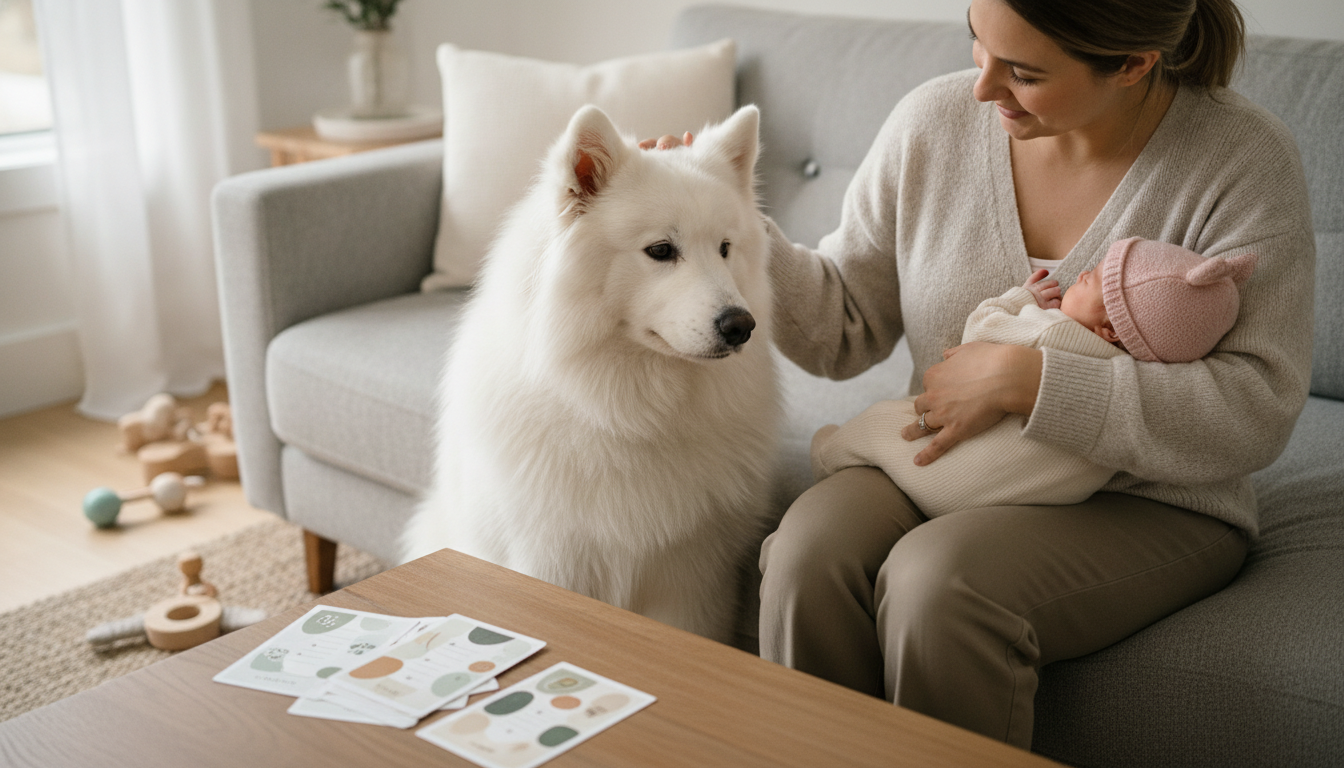
A new baby changes sounds, schedules, and space—exactly the kind of shift that can overwhelm even a well-loved family dog. A structured, low-stress introduction plan reduces risk, protects the baby, and helps the dog feel secure. Use the checklist approach below to prep before birth, manage the first meeting, and build safe daily routines during the first week home.
The smoothest introductions start weeks before homecoming day. The goal is to reduce surprises and give your dog clear, repeatable patterns.
If you want a simple way to keep everyone consistent (especially during sleep-deprived weeks), use a one-page plan like the Printable Dog & Baby Introduction Checklist to assign roles, track progress, and avoid “we forgot the rule” moments.
Dogs learn fast through repetition. A little “practice” makes baby sounds and movements less intense when they become real.
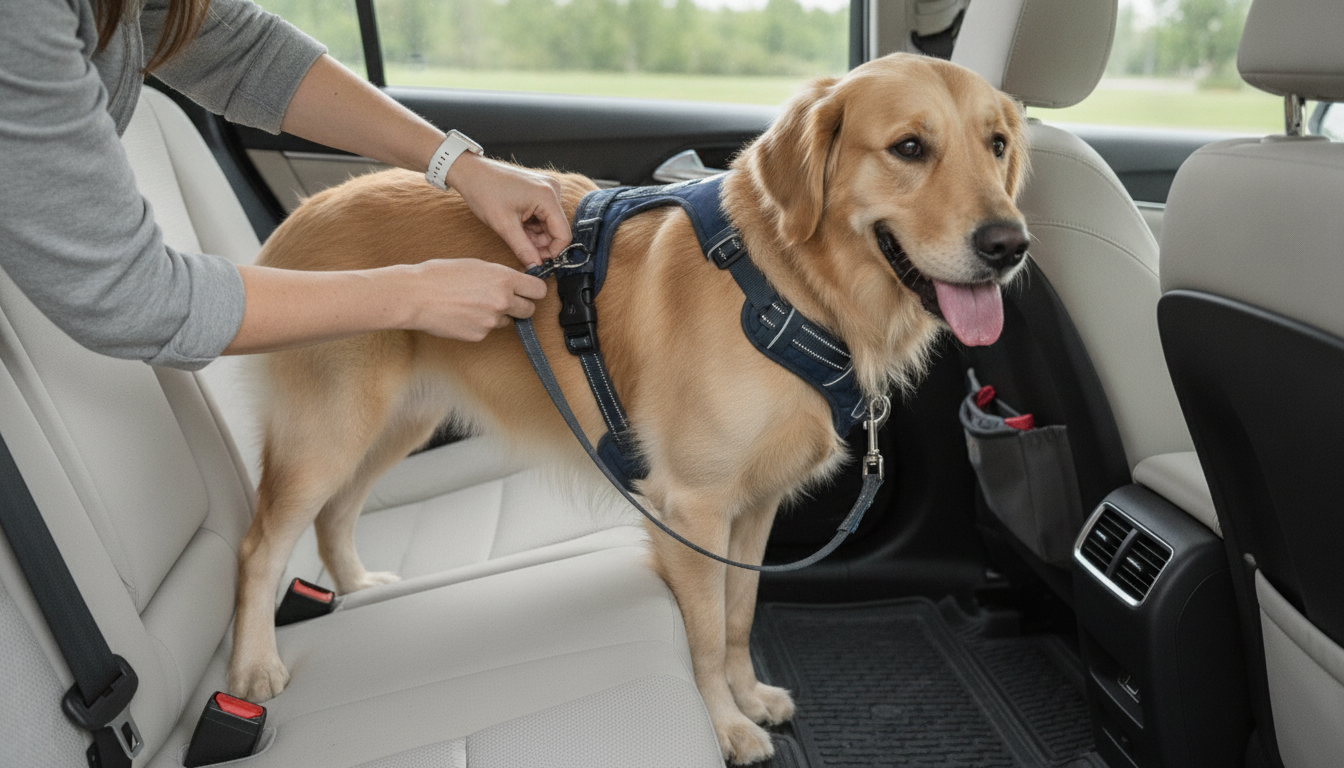
For safer practice walks and calmer controlled greetings, a secure harness fit matters. A quick reference like the Dog Harness Measurement Checklist can help you double-check sizing before you’re juggling a stroller and a leash.
The first introduction should feel boring—in a good way. Keep it short, protected, and easy to end.
Dogs rarely “bite out of nowhere.” The earlier you notice stress, the easier it is to keep everyone safe. For a helpful visual guide, the ASPCA’s overview of canine body language is a solid reference.
For additional safety reminders, review the American Academy of Pediatrics guidance on keeping children safe around dogs and the AVMA’s dog bite prevention tips.
| Situation | Do | Avoid | Helpful tools |
|---|---|---|---|
| Baby feeding (day or night) | Send dog to mat; reward calm; offer chew/lick activity | Pushing dog away with hands; yelling; letting dog crowd the chair | Baby gate, mat/bed, lick mat, stuffed toy |
| Baby crying | Increase distance; treat for calm; reduce volume triggers when possible | Comforting the dog by petting while anxious; forcing proximity | White noise, treats, quiet room |
| Tummy time / floor time | Use barrier and keep dog on leash or in dog zone | Letting dog roam freely near baby on the floor | Playpen, gate, leash |
| Visitors arrive | Ask for calm greetings; use mat cue; provide structured breaks | Excited crowding around baby and dog together | Gate, mat, treats |
| Dog wants attention during baby care | Offer scheduled attention later; reinforce settle; provide enrichment | Letting dog nudge into baby’s space; inconsistent rules | Puzzle feeder, chew, short training session |
No. If active adult attention can’t be maintained—even briefly—separate with a gate, pen, or closed door to prevent accidents and misunderstandings.
Treat growling as a serious warning and communication. Calmly create distance, prevent repeat situations with barriers and structure, and contact a qualified trainer or veterinary behaviorist; don’t punish the growl.
Use gradual sound desensitization, add distance, and reward calm behavior while providing enrichment during predictable fussy times. If the reaction escalates or doesn’t improve, bring in professional help early.









Leave a comment